
Short answer: when the installation is carrying its highest normal load. For many buildings that is winter, with heating and longer lighting hours; where cooling is the big load it can be summer; on food sites it is the run-up to peak production. Pick that period, survey on a normal working day, and keep to the same month each year so results compare.
Why load decides the timing
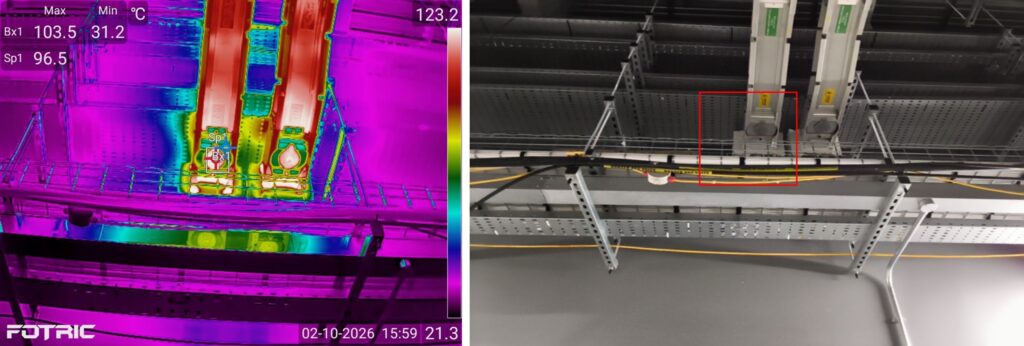
Thermography finds electrical problems by the heat they give off, and that heat depends on the current flowing. A poor connection on a lightly loaded circuit can sit only a few degrees above its neighbours and look unremarkable. The same connection under heavy load is far easier to see. So the calendar matters less than the load: survey when your equipment is working hardest under normal conditions, and record the load against every finding so the reader can judge it. More on this in what load a meaningful survey needs.
How it plays out by type of site
- Offices and commercial buildings. In many buildings electrical load rises in winter with heating, lighting and plant running longer. Where the building has a large cooling load, summer may be busier. Your building’s own metering will tell you which.
- Food production. Survey ahead of the seasonal peak, on a busy production day, so anything found can be dealt with in a planned shutdown before the busiest weeks.
- Warehouses and distribution centres. The run-up to peak trading is often when the site works hardest, and when a failure would cost most.
- Data centres. IT load changes less with the seasons, but it grows as halls fill. Survey under normal operating load once a year at least, and compare against the commissioning baseline.
Other things that should shape the date
- Keep the same month each year, so one year can be compared fairly with the next.
- Leave time before planned shutdowns, so findings can be put right in a shutdown you already have, not an emergency one.
- Line it up with your insurer’s renewal if they ask to see a recent report.
- Avoid the quietest shift. Nights and weekends are fine if the load is normal then; on many sites they are the worst time to survey.
- After major changes, such as new plant or a new line, survey once the load has settled.
How we plan it
When we quote, we ask when the site is busiest and plan the visit around it. One food producer we survey books us on a Monday because that is when its production, and its electrical load, is highest. Our thermographers are ITC Level 3 and Ti is a Level 3 certified company; we have carried out more than 700 electrical thermography inspections across a national distribution and logistics network since 2018. We inspect and report; any remedial work is for your electrician or contractor. Related reading: annual PPM thermography, switchgear thermography, busbar thermography at commissioning, the 7 electrical risks behind downtime and our data centre thermography work.
Frequently asked questions
Is winter always the best time?
No. It depends on where your building’s load peaks. Winter suits many heated buildings; sites with heavy cooling or seasonal production may peak at other times.
Can a survey still be useful outside the peak?
Yes, as long as the equipment is carrying a representative working load. The load is recorded with every finding so the results can be read in context.
How often should the survey be repeated?
At least once a year for most sites, and every six months for plant whose failure would stop production or critical services.
Talk to us: +44 20 3885 7464 · sales@thermalimaging.co.uk · send us your site details
About the author: Rachael Browning is General Manager of Ti Thermal Imaging, which carries out electrical thermography surveys for FM portfolios, food producers, data centres and industrial sites across the UK and UAE. Ti’s work has featured on BBC News and ITN.