
Short answer: Before an electrical thermography survey, ask the contractor for four things: a site-specific RAMS, the thermographer’s current certificate (ITC or PCN, with level and expiry), current insurance certificates, and the name of the person coming. In return, the site arranges the induction and an authorised electrician to open covers. Ti Thermal Imaging sends a site RAMS ahead of each visit, and its certificates and insurance documents when a new client sets us up as a supplier.
This question usually comes from the facilities manager’s side, a week or two before the visit: “send us your name, RAMS and competencies and we’ll send the induction”. Getting it right early is what stops a survey being turned away at the gate.
1. A RAMS written for your site, not a template
The risk assessment and method statement should name your site, the areas in scope (switch rooms, risers, production panels, plant rooms, roof plant) and how the thermographer will work in each one. Check it says who removes covers, what the safe distance and PPE are when covers are off, and what happens if a panel can’t be opened safely. On a good RAMS that last point is clear: it is recorded as not inspected, with the reason, and nobody forces it.
2. Competence: the certificate of the person on site
Ask for the certificate of the thermographer who will actually attend and sign the report, not a company brochure. Check the issuing body (ITC or PCN), the level and the expiry date, and who reviews the report before it is issued. Ti’s thermographers hold ITC certification and our team includes ITC Level 3. Our page on Level 1, 2 and 3 thermographers explains the difference, and NICEIC, ISO 9001 and TrustMark covers the accreditation questions on supplier forms.
3. Insurance certificates that are in date
Most approved-contractor systems ask for current public liability, employer’s liability and professional indemnity certificates. Some sites also send their own contractor insurance questionnaire for the contractor and its insurer to complete. Ask for it early: it often needs a broker’s signature, and an expired cover note on file is one of the commonest reasons a booked visit slips.
4. Names, dates and the induction
Send the contractor your induction requirements, sign-in arrangements, parking and any areas with set times, such as high-care food areas, clean rooms or tenant spaces. The contractor sends back the names of who is coming and on which days, so your team can plan who shows them round. More on this in what a site should send and prepare before a survey.
5. Your side: an authorised electrician, not an apprentice
Thermography needs a line of sight to the connections, so covers come off while the equipment is running. That is done by the site’s authorised electrician or maintenance contractor under the site’s own safe system of work. Many sites treat removing covers on live boards as live working, so they plan for a qualified electrician to go round with the thermographer, not a trainee. Ti’s thermographers image and record; they don’t remove covers or touch the equipment (see who opens the panels).
Why the paperwork matters to the result
A survey only finds what it can see. On a London data centre build, commissioning thermography by our team recorded 16 busbar sections reading above 80 °C under test load, the highest 103.5 °C at a tap-off unit. Every section was reached because access, escorts and the method had been agreed before the first day. Full detail in busbar thermography at commissioning.
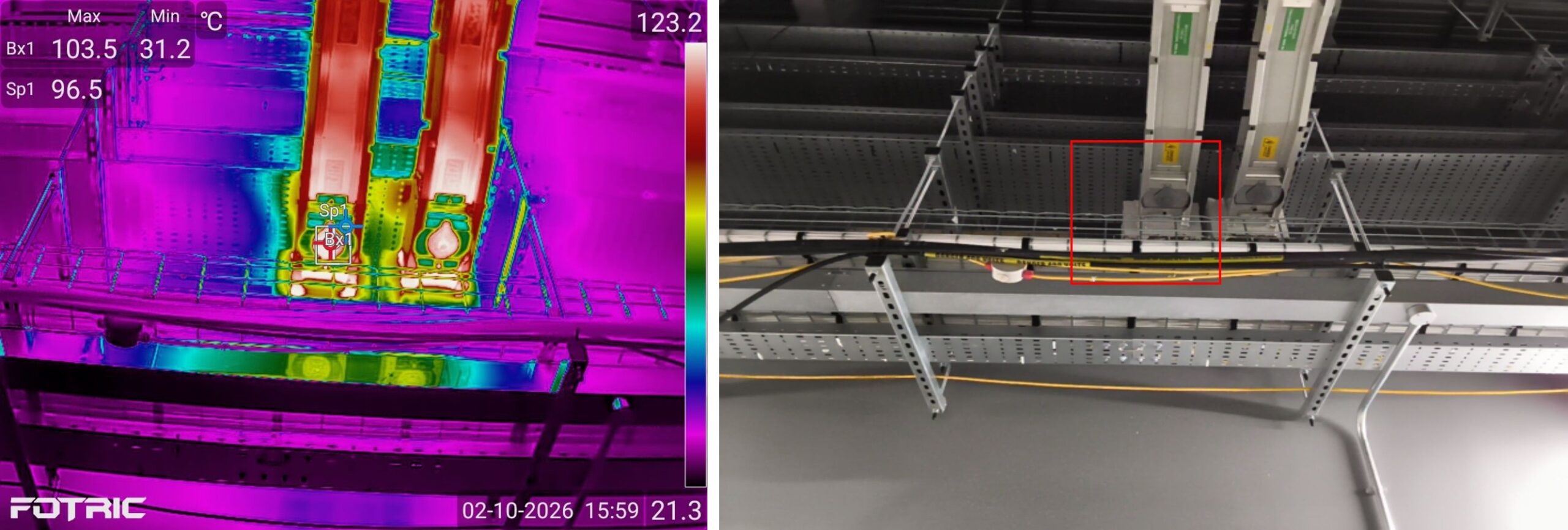
Ti inspects and reports only. Your electrician or maintenance contractor investigates findings with the circuit isolated and carries out any work. The report is issued the same day, with each finding located by board, circuit and phase. See also insurer-ready electrical thermography, our data centre thermography hub, switchgear thermography, annual PPM surveys and 7 electrical risks thermography finds.
Frequently asked questions
How far ahead should we ask for RAMS and insurance?
Ask when you confirm the dates. Two weeks is comfortable, especially if your own insurance questionnaire needs the contractor’s broker to sign it.
Does anything need switching off for the survey?
No. Electrical thermography looks at equipment running under its normal load. Only covers are opened, by site staff, and they go back on afterwards.
Will the same thermographer come back next year?
Ask for it. A thermographer who knows the site and last year’s report can re-check earlier findings in the same board order and show the change in °C.
Talk to us: +44 20 3885 7464 · sales@thermalimaging.co.uk · contact page
About the author: Rachael Browning is General Manager of Ti Thermal Imaging, which carries out electrical thermography surveys across the UK for data centres, FM portfolios, food production and industrial sites. Ti’s work has featured on BBC News and ITV.